First we understand the problemThen we solve it with technology
Most people start by picking the tool. I start by understanding the process.

Without a website of its own, there's no way to take direct bookings online — and every booking pays a 20% commission.
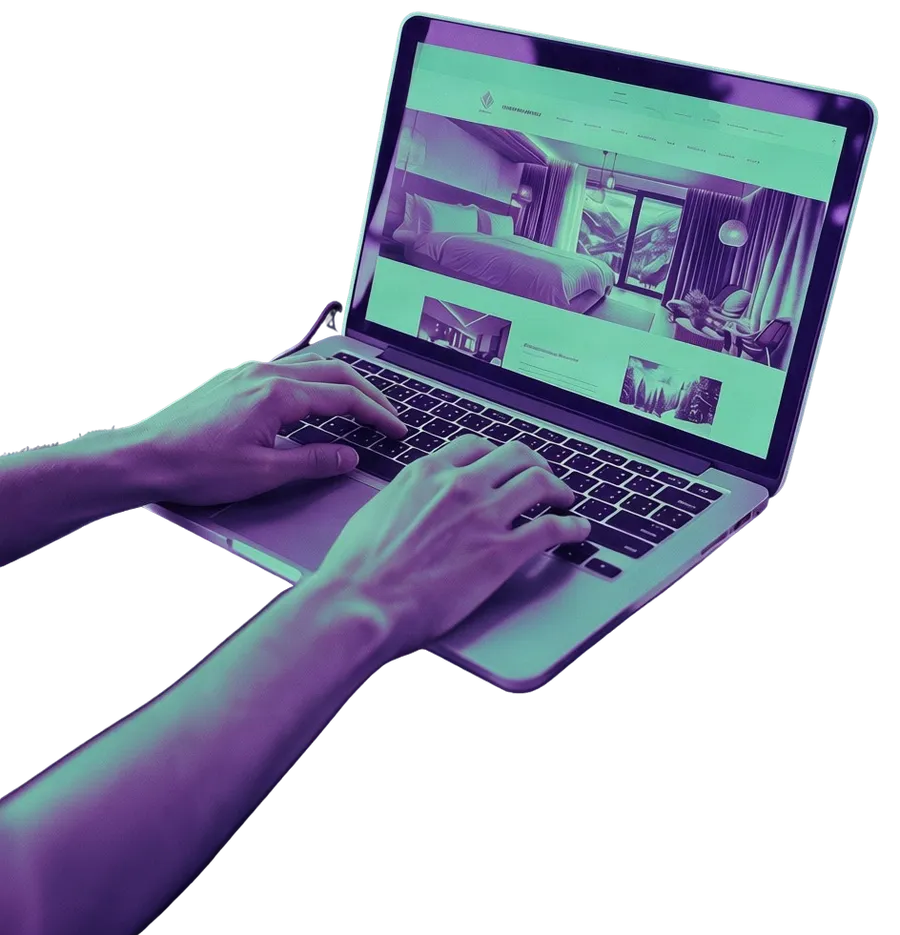
The process to automate
A B&B with very good reviews but no website of its own. Almost 90% of bookings come through Booking.com, and each one pays a commission. Guests who find them on Booking.com and then search for them on Google can't find the property, so they book through Booking.com again or choose somewhere else.
Meanwhile, the owners spend a good part of the day answering the same questions: where to park, what time check-in is, where to leave their luggage if they arrive early or leave late.
1Operational audit
Two areas to automate:
- Capture direct bookings online. Today the only direct channel is the phone. Anyone who wants to book without going through Booking.com has to call — and if they call after hours, they don't book.
- Answer the same questions. Five or six questions cover 80% of conversations, always with the same answers.
The tools they use today: Booking.com as the main channel, a channel manager that keeps availability in sync.
2Implementation
A website of their own with a booking engine and an AI agent that answers frequently asked questions and guides the guest to the right room.
The booking engine connects to the channel manager. A direct booking from their own website triggers the same automatic flow they already have with Booking.com — same record, same availability sync, zero new manual work.
The AI assistant answers only with real information about the B&B, helps the guest choose the right room, and escalates to the owners when a question needs human judgment. It never makes up availability or confirms anything it can't verify.
3Rollout and measurement
Two concrete results, each with its own metric.
Less dependence on Booking.com.
The website is the foundation. On top of it, we switch on Google Free Booking Links — Google's free service that shows the price on the B&B's own website next to Booking.com's in search results. If someone searches for the B&B on Google and sees a slightly lower direct price, they book direct.
It's measured by direct bookings per month and the share of bookings that no longer pay commission.
Fewer repeated questions.
During the first month we measure how many questions the chat answered on its own, and how much less time the owners spend answering the same things each day.
Automating outbound isn't automating the emails. It's automating the hours spent before writing them.
The process to automate
A B2B rep starts the day in Apollo. They filter companies by size and sector according to the ICP, find contacts with the right title, and verify each one on LinkedIn. Then they move to the CRM: build the sequence, write barely personalized messages in batches, schedule the follow-ups.
When they look up, it's already afternoon. They haven't spoken to a single customer.
If they use templates to go faster, the quality of the replies drops. If they work hard to do this job "well", they have no time left for anything else.
1Operational audit
The rep had access to Apollo, but filtered leads by hand. Every account required several decisions: does it fit the ICP? Does the person have the right title? Are there signals on their website that point to the right pain point? Those decisions could be turned into rules.
What couldn't — and shouldn't — be automated: in B2B, when a prospect replies, every conversation needs human judgment.
The tools they use today: Apollo for the database, HubSpot as the CRM, Gmail for sending.
2Implementation
An AI agent that runs every day, at one or more scheduled times, with specific tasks.
It finds companies that fit the ICP, identifies the people with the right title and pain, enriches only the leads with the right signals, uses its own messaging framework to write a personalized email, and logs every send.
Every day it sends the follow-ups that are due, checks for replies, sorts them, prioritizing anyone who asks for a meeting, and escalates to human review when something needs judgment.
The agent doesn't write directly to the CRM. It logs everything in a Google Sheet that works as staging. The migration to HubSpot only switches on once the process is stable — so the database stays clean.
The rules the system always follows: at most 40 emails per day (to protect the domain's reputation), at most 3 active contacts per domain, follow-ups at 5 and 10 business days with no skipped steps, no sending on weekends, seasonal pauses respected. If an account doesn't have enough evidence, it doesn't make the list. If a rule is broken, the system stops and sends an alert.
3Rollout and measurement
The goal isn't "sending more emails". It's that the ones that go out reach people who are a better fit for what we sell.
Better quality of the conversations that come in.
Measured qualitatively: what share of replies come from leads who could genuinely buy, instead of bounces or quick brush-offs. It's the metric that matters in outbound.
Time freed for the rep.
The rep no longer spends the day filtering and writing cold emails. That time goes to conversations with the leads who already replied — the part of the job an agent can't do well.